
How Days on Market Affect Listing Price. RED DOG Property Refresh Can Refresh Your Sale.
A home gets its loudest attention the moment it hits the market. Buyers see the new listing alert, agents send it to clients, and the first wave of showings often brings the clearest feedback. If the home does not create demand early, the listing can start to feel older than it actually is.
That age has a name: days on market, often shortened to DOM.
DOM is not just a number in the MLS. It shapes how buyers read the listing, how agents talk about it, and how much negotiating power a seller may have. The longer a home sits without the right response, the more buyers start asking the same question: “What is wrong with it?”
Sometimes the answer is price. Sometimes it is condition. Often, it is both.
This is where a smart refresh can change the story. RED DOG Property Refresh helps sellers improve the parts of a home that buyers notice first, from paint and flooring to curb appeal and strategic remodels. The goal is simple: help the home enter the market looking ready, confident, and worth the price.

Why the first days on market matter so much
Most listings get their highest level of attention when they are new. That does not mean a home must sell in the first weekend. Many homes need time for the right buyer to see them. But a listing’s first days carry extra weight because buyers and agents are actively watching for fresh inventory.
A new listing has several advantages:
It appears in “new to market” searches.
Agents are more likely to mention it to active buyers.
Buyers compare it against homes they have already rejected.
Early showings generate fast feedback.
A strong first impression can lead to stronger offers.
Once the listing ages, the mental shift begins. Buyers may still like the home, but they may also wonder if they can negotiate harder. Some may assume other buyers passed on it. Others may wait for a price cut.
That perception can affect listing price even if nothing about the home has changed.
DOM does not lower a home’s value by itself. It changes buyer behavior, and buyer behavior can put pressure on price.
A home that feels fresh, well-priced, and move-in ready gives buyers fewer reasons to hesitate. A home with worn flooring, tired paint, dated fixtures, or visible repairs gives them a reason to slow down, compare, and discount.
How DOM can put pressure on listing price
Listing price and DOM work together. If a home launches at a price that matches its location, condition, and competition, it has a better chance of drawing early interest. If the price is high for the condition, the market usually sends a message.
That message may show up as:
Low showing activity
Good traffic but no offers
Repeated buyer comments about condition
Offers below list price
Requests for credits or repairs
Longer time between showings
The longer those signals continue, the harder it can be to protect the original list price.
An illustrative DOM pressure curve
The chart below is not a market statistic. It is a simple illustration of how buyer urgency often changes as a listing ages. Actual results vary by city, price point, season, inventory, mortgage rates, and property type.
Listing age | Common buyer perception | Typical seller challenge |
0 to 7 days | New, worth seeing quickly | Must justify the price immediately |
8 to 21 days | Still relevant if priced well | Feedback starts to matter more |
22 to 45 days | Buyers begin to ask why it has not sold | Price and condition face closer review |
46 to 60 days | Negotiation pressure often grows | Seller may need a stronger adjustment |
60 or more days | Listing can feel stale | A reset strategy may be needed |
Here is the same idea in a visual format.
Week on market | Relative buyer urgency |
Week 1 | ██████████ |
Week 2 | ████████ |
Week 3 | ██████ |
Week 4 | █████ |
Week 5 | ████ |
Week 6 and beyond | ███ |
This does not mean every home loses momentum at the same speed. In a low-inventory market, a well-priced home may stay competitive longer. In a market with many similar options, buyers may move on quickly.
The pattern still matters. A listing that starts strong usually has more pricing power than one that needs several rounds of reintroduction.
Price cuts can help, but they can also signal weakness
A price reduction is sometimes the right move. If a home launched too high, adjusting the price can bring it back into the buyer pool. The risk is that price cuts after a long DOM can feel reactive.
Buyers may read a price cut as an invitation to negotiate further.
A seller might start at $525,000, get little traffic, reduce to $510,000 after several weeks, then receive offers at $495,000 because buyers see both the age and the adjustment. This example is hypothetical, but the behavior is common enough that sellers should plan for it.
The stronger strategy is to reduce the need for a price cut before the listing goes live.
That means looking at the property like a buyer:
Does the entry feel clean and cared for?
Do the photos show bright, updated spaces?
Are there visible repairs that make the home feel neglected?
Does the kitchen feel functional and current?
Do bathrooms look clean, fresh, and easy to live with?
Are paint colors helping or hurting the listing?
Does flooring photograph well?
Does the outside make buyers want to come in?
Small flaws can carry a large emotional weight. A stained carpet may cost less to fix than the discount a buyer imagines. A dated vanity may feel like “a project,” even if the rest of the home is solid. A dark room may photograph poorly and lose buyers before they ever schedule a showing.

Why condition affects both DOM and offer strength
Buyers do not only compare square footage and bedroom count. They compare effort.
A move-in ready home feels easier. A dated home feels like work. Even when buyers say they are open to projects, many still discount for inconvenience, uncertainty, and time.
Condition affects the sale in three big ways.
It shapes the first impression online
Most buyers meet the home through photos. If the home looks dark, worn, cluttered, or dated, it may never get a showing. Good photography helps, but photography cannot fully hide tired finishes.
A refresh helps the camera tell a better story. Lighter walls, updated lighting, clean floors, and repaired surfaces can make rooms feel larger and more inviting.
It affects the buyer’s mental repair budget
Buyers often overestimate repair costs because they are trying to protect themselves. A seller may see a $1,500 flooring issue. A buyer may see a $7,500 headache. If several small issues appear at once, the buyer may bundle them into one large perceived discount.
This can show up as lower offers or requests for seller credits.
It reduces doubt
Visible neglect creates doubt about hidden problems. Peeling paint, damaged trim, broken fixtures, stained grout, or tired landscaping can make buyers wonder what else has been deferred.
A clean, refreshed home sends a different message. It tells buyers the seller has cared about presentation and upkeep.
How strategic refreshes can shorten DOM
A refresh does not need to mean a full renovation. In many cases, the best pre-listing work is focused, practical, and tied to buyer behavior.
RED DOG Property Refresh looks for improvements that can make the home more marketable without turning the seller’s budget into an open-ended remodel.
Common high-impact refresh projects include:
Area | Refresh work that impact | Why buyers notice |
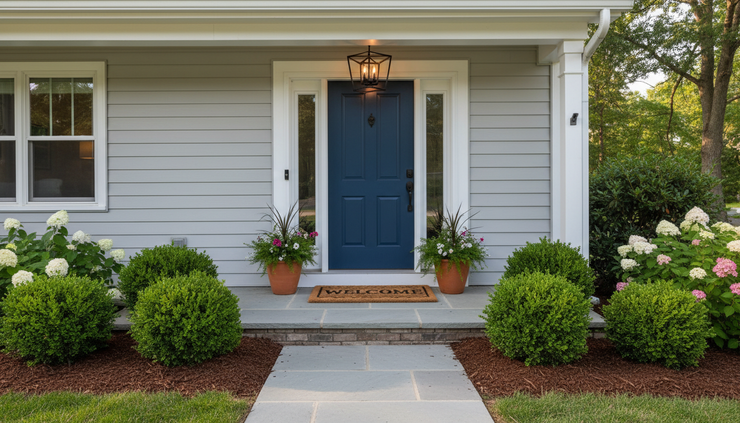
Entry and curb appeal | Mulch, trimming, door paint, hardware, lighting | Sets expectations before the showing starts |
Interior paint | Neutral walls, clean trim, fresh ceilings where needed | Makes rooms feel brighter and cleaner |
Flooring | Floor replacement, floor repair, deep cleaning | Affects both photos and in-person comfort |
Lighting | Updated fixtures, brighter bulbs, consistent color temperature | Makes the home feel newer and more open |
Kitchen | Hardware, faucet, backsplash, cabinet touch-ups, counters when needed | Buyers focus heavily on kitchen condition |
Bathrooms | Vanity updates, mirrors, fixtures, grout, caulk, lighting | Clean bathrooms reduce buyer objections |
Repairs | Drywall, doors, trim, leaks, broken items | Removes easy reasons to discount |
Staging support | Layout edits, simple furniture placement, clutter reduction | Helps buyers understand the space |
The best projects depend on the home’s price range and competition. A starter home may benefit most from paint, floors, and curb appeal. A higher-priced home may need kitchen or bath updates to meet buyer expectations. A rental property entering the resale market may need repair triage before cosmetic work.
The key is choosing work that helps the listing compete.
A practical example of refresh versus waiting
Consider a hypothetical home that is structurally sound but visually tired. It has beige walls with scuffs, old carpet in the bedrooms, dated brass light fixtures, worn bathroom caulk, and overgrown shrubs. The seller wants to list quickly and avoid spending money.
There are two possible paths.
List as-is
Refresh first
The home goes live with visible wear. Photos look dull. Buyers compare it to cleaner homes and build a repair budget in their heads. Showings are slower. After several weeks, the seller considers a price cut.
The seller completes paint touch-ups, carpet replacement, lighting updates, bathroom caulk, landscaping cleanup, and minor repairs. Photos look brighter. Buyers see fewer projects. The home has a better chance to earn strong early attention.
The refresh path does not guarantee a faster sale or a higher price. Real estate markets are too complex for guarantees. But it can improve the listing’s position before DOM starts counting and data suggests that overall, properly refreshed homes sell 10-24 days faster and can sell for up to 12% more.
Timing matters. Once a listing has been sitting for weeks, a refresh can still help, but it may need to be paired with new photos, revised pricing, and stronger repositioning. It is usually easier to launch well than to repair a stale first impression.
When a remodel makes sense before listing
Not every remodel pays off before a sale. Sellers should be careful with large projects that are based on personal taste. A full custom renovation may cost more than the market will reward.
Strategic remodels are different. They target specific buyer objections.
A pre-listing remodel may make sense when:
The kitchen is far below the standard of comparable homes.
A bathroom has damage, heavy wear, or dated finishes that dominate the showing.
Flooring throughout the home makes the property feel neglected.
The layout works, but surfaces make the home feel older than the competition.
Buyers in the price range expect move-in ready condition.
A strategic kitchen refresh might include cabinet painting, modern hardware, a new faucet, updated lighting, and a simple backsplash. A bathroom refresh might include a new vanity, mirror, fixtures, fresh caulk, and updated lighting.
These changes can make the home feel cared for without rebuilding the whole room.
RED DOG Property Refresh can help prioritize the list so sellers do not spend in the wrong places. The goal is not to make the home perfect. The goal is to remove the objections that increase DOM and weaken offers.
What to do if your listing is already getting older
An older listing is not a lost cause. It needs a clear reset.
Start with the data you already have:
Signal | What it may mean | Possible response |
Few online views | Photos, price, or listing appeal may be weak | Improve presentation and review pricing |
Online views but few showings | Buyers may not see enough value | Refresh visible issues and adjust positioning |
Showings but no offers | Condition or price may not match expectations | Use feedback to target repairs or price |
Offers far below list | Buyers see risk or overpricing | Address objections and review market fit |
Repeated comments on the same issue | The market has identified a problem | Fix it or price clearly around it |
A reset may include new photos, refreshed rooms, improved curb appeal, better staging, and a pricing review with a qualified real estate professional. If the home was listed as-is and feedback keeps pointing to condition, cosmetic work can help change the conversation.
For example, a listing with dated bedroom carpet and dark paint may struggle in photos. Replacing carpet and painting key rooms can create a reason to relaunch the listing with new images. That gives agents something fresh to share and buyers a reason to take another look.
This content is informational only and is not financial, legal, or real estate advice. Pricing and sale strategy should be reviewed with licensed local professionals who understand the market.

How RED DOG Property Refresh helps protect the launch
The best time to think about DOM is before the listing goes live. Once the clock starts, every week carries information. A well-prepared home has a better chance to make those early days count.
RED DOG Property Refresh supports sellers by focusing on the practical work that can affect buyer response:
Identifying visible issues that may hurt photos or showings
Recommending refresh projects based on likely buyer objections
Making the property feel move in ready and creating a higher perceived value
Coordinating cosmetic updates and small remodels
Improving curb appeal and first impressions
Supporting a listing reset when DOM has already become a concern
That work can be especially useful when a seller feels stuck between two choices: spend nothing and risk a stale listing, or overspend on a renovation that may not be needed. A targeted refresh sits in the middle. It aims to improve buyer confidence without losing sight of the sale.
The strongest listings rarely rely on price alone. They match price with presentation. They make it easy for buyers to say yes.
The takeaway for sellers
Days on market can change the way buyers see a home. A new listing feels like an opportunity. An older listing can start to feel like a negotiation. Condition plays a major role in that shift because buyers use visible details to judge value, effort, and risk.
A smart refresh can help a home start stronger, photograph better, and reduce the objections that lead to longer DOM. Paint, flooring, lighting, curb appeal, repairs, and selective kitchen or bath updates can all change how the market responds.
Before listing, ask one clear question: What would make a buyer hesitate?
Then fix what matters most. RED DOG Property Refresh can help turn that answer into a focused plan, so the home enters the market with its best chance to sell with confidence.


Comments